
If you’ve been a Christian for a while, you know the story. In a time when Jewish law had 613 commandments—a huge list of rules for everything—one of the religious experts tried to test Jesus. He asked, “Teacher, which is the most important commandment?”
Jesus’ answer was a game-changer. He didn’t choose some obscure rule. Instead, He simplified everything into what we now call the two greatest commandments, two core principles that are deeply connected.
He said, “You shall love the Lord your God with all your heart and with all your soul and with all your mind. This is the great and first commandment. And a second is like it: You shall love your neighbor as yourself. On these two commandments depend all the Law and the Prophets.” (Matthew 22:37-40)
These two greatest commandments are the foundation of our faith. They serve as the filter for everything we do and think. Understanding and living out these commandments isn’t just about knowing theology; it’s about aligning with God’s heart and embracing the life He has for us.
The First Commandment: A Call to Total Devotion
Jesus’ first instruction was about our relationship with God. On the surface, “love the Lord your God” seems pretty straightforward. But then Jesus added the qualifiers—with all your heart, soul, and mind—showing us this love is meant to be all-encompassing.
Decoding Heart, Soul, and Mind
In our culture, we usually think of the “heart” as just feelings or romance. But in the Bible, the heart is really the command center of your will and personality. Loving God with all your heart means choosing to put His desires ahead of your own.
Loving God with your “soul” is about your passion and your life force—it’s that deep-down essence of who you are. Then there’s the “mind.” Faith isn’t meant to be blind; it’s about using your brain to study, reason, and really get to know God.
When you put these three together, you get a love that’s the whole package. It’s not enough to just have a “warm fuzzy feeling” for God if you aren’t interested in His truth. And being a walking encyclopedia of theology doesn’t mean much if you don’t have a personal, passionate connection. This commandment is a call to bring your whole self to the table.
Expressing Vertical Love in Daily Life
So, how can you love a God you can’t see? It starts with where you put your attention. Think about it—we naturally focus on what we love. Practically, this means setting aside time for prayer, and not just the “give me” kind, but also just being quiet and thankful. It also looks like worship, which is really just telling God how great He is.

Loving God also means trusting Him. When life gets tough or makes no sense, your brain might tell you God’s not there, but your heart can hold on to His promises. Trusting God in the middle of a storm might just be the deepest way to show your love.
The Link Between Love and Obedience
People often think love is just a feeling, but Jesus showed us that love is really about action. In the Gospel of John, He said, “If you love me, you will keep my commandments.”
Love and obedience go hand in hand. It’s like in a strong marriage—saying “I love you” is nice, but real love is shown by honoring vows and respecting each other. In the same way, loving God means living in a way that reflects His character and aligns with His will. It’s about showing it, not just saying it.
The Second Commandment: The Standard of Human Relations
Once Jesus made it clear that loving God comes first, He gave us a second rule: “Love your neighbor as yourself.” He actually said this one is “like” the first, which means they’re both equally important and go hand in hand.
Defining the “Neighbor”
We naturally love to draw lines in the sand, deciding who’s “in” and who’s “out.” Back in the day, religious leaders spent a lot of time arguing over who actually counted as a neighbor—usually limiting it to people who looked, acted, and believed just like them.

Jesus completely flipped the script with the story of the Good Samaritan. He chose a cultural outsider—someone people were supposed to dislike—to be the hero of the story. His point? A neighbor isn’t defined by your zip code, race, or religion. It’s anyone right in front of you who needs a hand. Basically, if you cross paths with someone who needs compassion, they’re your neighbor.
Loving “As Yourself”
The bar for this kind of love is set sky-high: “as yourself.” It’s about taking your ego out of the equation. We’re all wired to look out for number one—to protect ourselves, stay comfortable, and chase happiness. We’re quick to make excuses for our own mess-ups but jump to judge others for theirs. Loving your neighbor as yourself means giving others the same grace, help, and protection you automatically give yourself.
What does that look like in real life?
- Actually Listening: Giving someone your undivided attention in a world full of distractions.
- Being Generous: Sharing what you have with someone in need, even when it’s a hassle.
- Standing Up for Others: Using your voice for those who are overlooked or can’t speak for themselves.
- Showing Patience: Taking a breath and choosing not to snap back when someone pushes your buttons.
The Challenge of the Unlovable
Let’s be honest: it’s easy to love people who are kind, cool, or just like us. The real test comes when we have to deal with difficult, annoying, or even hostile people. Jesus pushed this to the limit in the Sermon on the Mount when He told His followers to “love your enemies and pray for those who persecute you.”
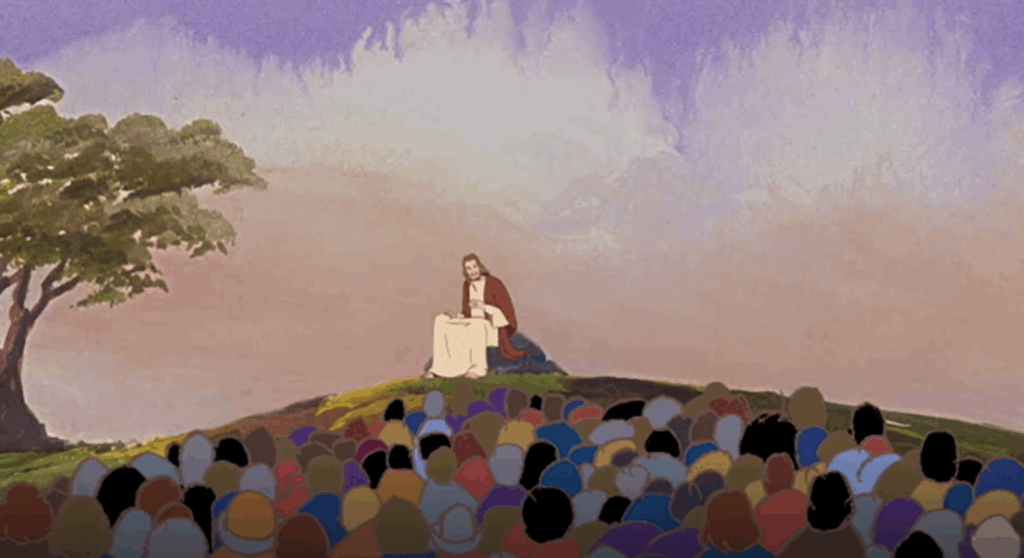
This kind of love—what the Greeks called *agape*—isn’t about warm fuzzy feelings or even liking someone. It’s a choice. It’s a decision to want the best for someone else, regardless of how they act. To be clear, this doesn’t mean putting up with abuse or toxic behavior. It just means letting go of bitterness and hoping for their growth instead of their downfall.
The Inseparable Nature of the Two Commandments
A common mistake is trying to separate these two ideas. Some people go all-in on theology and spiritual rituals (loving God) but forget to actually be kind or help people (loving neighbors). Others do amazing charity work (loving neighbors) but lose touch with the spiritual “why” behind it all (God).
Jesus taught that you can’t really have one without the other—they’re a package deal. You can’t fully follow one if you’re ignoring the other.
Vertical Roots, Horizontal Fruit
Think of your relationship with God as the roots and your relationship with others as the fruit. A tree without roots eventually dies, but a tree with roots that never grows fruit isn’t doing much good either.
The Apostle John didn’t sugarcoat it. He basically said that if you claim to love God but treat people like garbage, you’re lying. Since people are made in God’s image, how we treat them is the real test of our faith.
On the flip side, leaning into God is what gives us the energy to love others. Let’s be real: our own patience and kindness have limits. But when we’re plugged into the source of infinite love, we can actually show grace to difficult people—even when they drive us crazy.
The Deep Stuff
To really get why Jesus’ answer was such a big deal, we have to look at the history. He wasn’t just making up new rules on the fly; he was quoting the Hebrew Scriptures his audience knew by heart.

The Shema and Leviticus
The part about loving God comes from Deuteronomy 6:5, a passage called the Shema. Pious Jews recited this twice a day—it was the core of their faith. By using this, Jesus was showing that he wasn’t throwing out the Law of Moses.
The part about loving your neighbor comes from Leviticus 19:18. By pairing these two, Jesus did something pretty radical: he put loving people on the exact same level as loving God.
The Big Idea
When Jesus said all the “Law and the Prophets” depend on these two things, he was giving us a “cheat code” for the entire Bible. Every other rule, prophecy, and ritual only makes sense through the lens of these two points.
Think of it this way: if a religious rule makes you treat someone badly, you’re doing it wrong. If your theology makes you hate God, you’ve missed the point. These two commandments are the “true north” for how we should live. They take a complicated religion and turn it back into a living, breathing relationship.
Practical Application in the Modern World
We live in a polarized, digitized, and often isolated society. In this environment, the two greatest commandments are more counter-cultural and necessary than ever. Living them out requires intentionality.
Overcoming Modern Obstacles
The biggest enemies of these commandments today are busyness and tribalism.
- Busyness: We are often too distracted to love God with our minds (deep thought/prayer) and too hurried to love our neighbors. We walk past people in need because we are late for the next appointment. Slowing down is a spiritual necessity.
- Tribalism: Social media algorithms act to segregate us into echo chambers. We start to view those with different political or social views not as neighbors, but as enemies. Loving your neighbor in the 21st century involves refusing to dehumanize people online. It means seeking to understand before seeking to be understood.
Everyday Examples
What does this look like on a Tuesday morning?

Workplace: It means doing your work with excellence (as unto God) and treating your coworkers with respect, avoiding gossip and office politics (loving neighbor).
Home: It means prioritizing family worship or prayer (loving God) and serving your spouse or children sacrificially (loving neighbor).
Community: It could mean inviting a lonely neighbor for dinner, volunteering at a local shelter, or simply learning the name of the barista who serves your coffee.
There are inspiring examples of this throughout history, from Mother Teresa serving the dying in Calcutta to Martin Luther King Jr. advocating for civil rights based on the principle of Christian love. But there are also millions of unnamed believers who visit hospitals, feed the hungry, and forgive their offenders, quietly weaving the fabric of these commandments into the story of humanity.
A Filter for Life
The brilliance of Jesus’ teaching is how simple yet deep it is. By narrowing everything down to love—love for God and love for others—He gave us a clear guide to navigate life’s complexities.
These two commandments aren’t meant to weigh us down; they’re meant to set us free. Instead of stressing over endless rules, we can focus on what really matters: our hearts. At the end of the day, it’s not about our money, status, or accomplishments—it’s about how well we loved.
Living this out means aligning ourselves with God’s nature. It’s not always easy; it takes grace and surrender every day. But it’s the only path to a truly fulfilling life.
Find more inspirational content to watch in your home at Living Scriptures+