
Easter is the Christian celebration of Jesus Christ’s resurrection, the event at the center of the Christian faith. It answers the question many ask each spring: why do we celebrate Easter, and why does it still matter year round? For many Christians, Easter is not just a holiday but a declaration of hope, life, and victory over death through Jesus.
Who This Is For
- Anyone wanting a clear, biblical explanation of Easter
- Families looking to make Easter more meaningful
- Readers exploring the history and traditions of Easter
Easter FAQs
Why do we celebrate Easter?
Christians celebrate Easter to remember the resurrection of Jesus Christ. It marks the victory over death and the promise of eternal life for those who believe.
What is the meaning of Easter in Christianity?
Easter represents the foundation of the Christian faith. It celebrates that Jesus died for sin and rose again, offering new life and hope.
Where does Easter come from?
Easter has roots in early Christianity and the Jewish Passover. Early believers celebrated the resurrection as the fulfillment of God’s promise of deliverance.
Why does the date of Easter change every year?
Easter follows a lunar-based formula. It falls on the first Sunday after the first full moon on or after March 21, which causes the date to shift each year.
What are common Easter traditions?
Common traditions include church services, Easter egg hunts, and family gatherings. Many customs, like eggs and the Easter Bunny, symbolize new life and renewal.
The Easter Story and Christ’s Resurrection
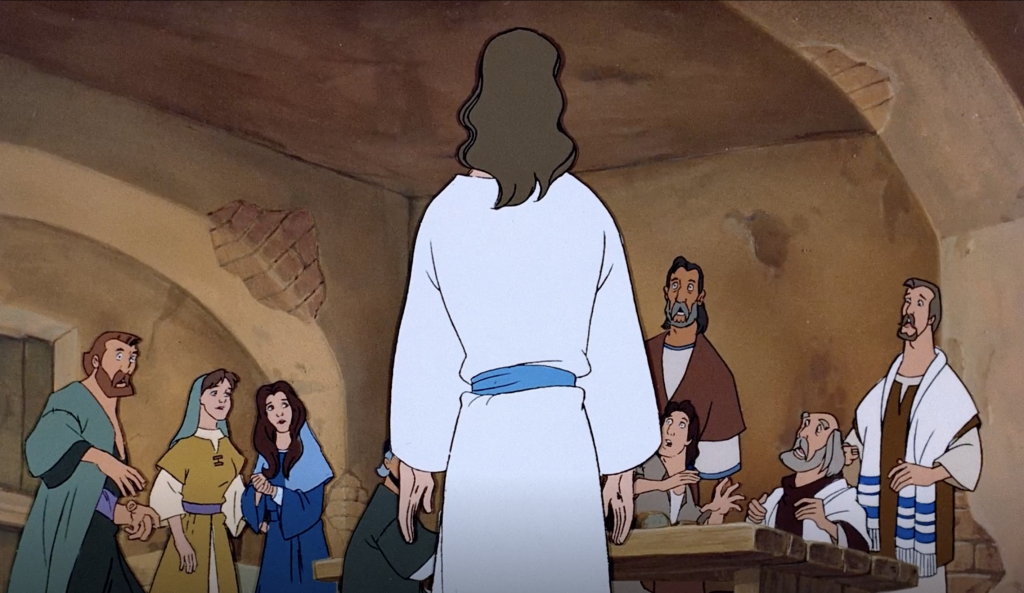
All four Gospel accounts in the New Testament record the resurrection of Jesus Christ. They describe how Jesus died, how Christ died on the cross, and how on the third day, Jesus rose, leaving behind the empty tomb. Matthew, Mark, Luke, and John all agree on the essential facts: Jesus was crucified, died, and was buried in a sealed tomb. Three days later, that tomb was empty. Women who came at dawn to care for the body found the stone rolled away and Jesus gone.
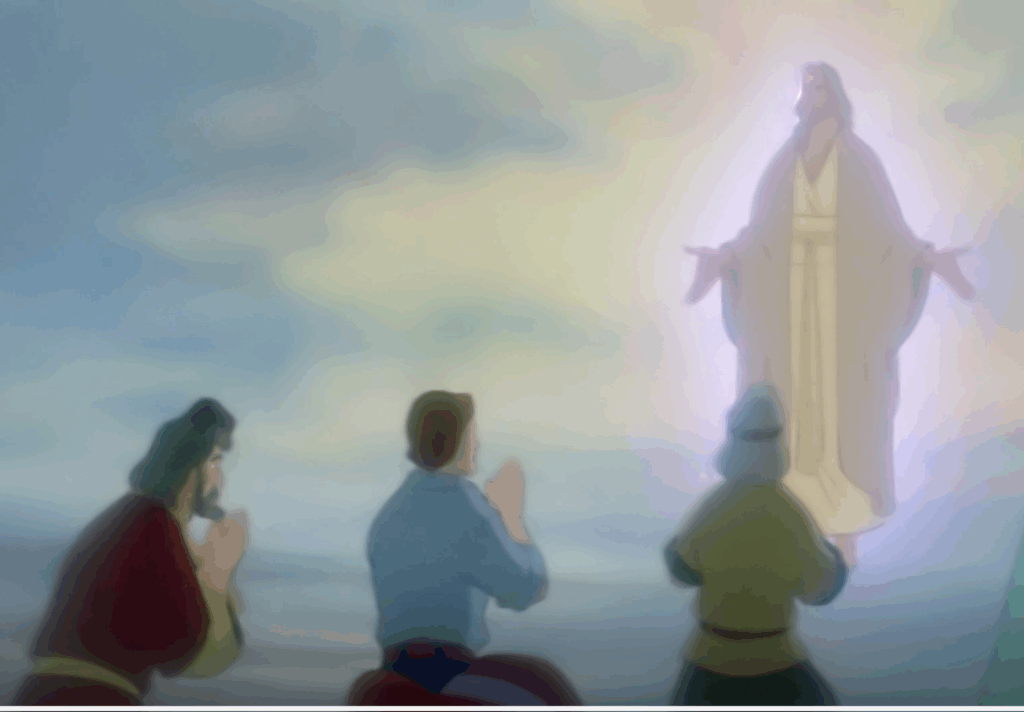
The New Testament records dozens of post-resurrection appearances. Paul, writing around 55 AD and well within living memory of the event, lists them directly in 1 Corinthians 15:3-8. Christ appeared to Peter, then to the twelve apostles, then to more than five hundred people at once, then to James, then to all the apostles, and finally to Paul himself. Paul specifically notes that most of those five hundred were still alive when he wrote, an implicit invitation to go ask them.
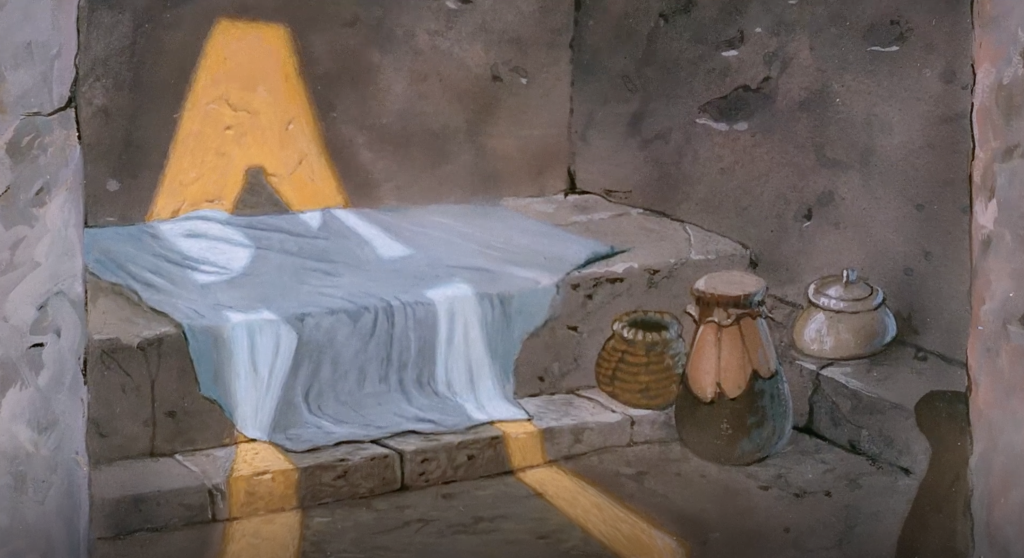
The empty tomb carries its own significance. The Roman authorities sealed it and posted guards precisely because they were worried someone would steal the body and claim resurrection. When it turned up empty anyway, the official story became that the disciples had stolen the body while the soldiers slept. Critics of Christianity have wrestled with the empty tomb ever since, because the simplest explanation for it is the one the disciples were proclaiming from the beginning: Jesus was raised.
God’s Promise and Eternal Life: Theological Significance
The resurrection of Jesus is not a footnote. It is the foundation of the Christian faith. Because Christ died and rose again, God’s promise of eternal life and new life becomes reality. Paul makes clear in 1 Corinthians 15:17 that if Christ was not raised, “your faith is futile; you are still in your sins.” The resurrection is the event the entire Christian faith stands or falls on.
What the resurrection means is that death has been defeated. Not postponed. Defeated. Jesus’s own words in John 11:25-26 put it plainly: “I am the resurrection and the life. The one who believes in me will live, even though they die; and whoever lives by believing in me will never die.” This is the promise Easter points to every year: death is not the end.
Paul develops this in Romans 6:5, connecting the resurrection directly to the hope of every believer: “For if we have been united with him in a death like his, we will certainly also be united with him in a resurrection like his.” The resurrection of Christ is the first instance of what God promises for all who trust in him: new life, bodily and eternal, on the other side of death.
1 Peter 1:3 calls this “a living hope.” This living hope shapes how believers follow Jesus and understand life, death, and what comes after. A confident expectation grounded in something that already happened. Easter is the annual celebration of that hope.
Early Christianity: Origins and Date Controversies
The earliest Christians did not call their celebration Easter. They called it Pascha, the Greek and Aramaic form of Passover. The connection was not incidental. Jesus was crucified during Passover week, and the Gospel of John explicitly frames him as the Passover lamb: “Not one of his bones will be broken” (John 19:36), echoing the Passover instructions in Exodus 12.
From the very beginning, early Christians understood the resurrection through the lens of the Jewish Passover: God’s act of deliverance, now accomplished not through the blood of a lamb on doorposts, but through the death and resurrection of Jesus himself.
The word “Easter” in English appears to come from Eostre, a Germanic spring figure mentioned by the 8th-century monk Bede. Most other languages use a word clearly descended from Pascha: French Paques, Spanish Pascua, Italian Pasqua. These all reflect the Jewish Passover roots far more directly. The English name is something of an outlier.
Early Christianity Practices and Pascha
By the 2nd century, Paschal observance was widespread but not uniform. Some communities celebrated with fasting, prayer, and an all-night vigil that ended with the Eucharist at dawn, an enactment of waiting for resurrection and then greeting it with the breaking of bread. This vigil practice, the Easter Vigil, remains one of the oldest continuous liturgical traditions in Christianity.
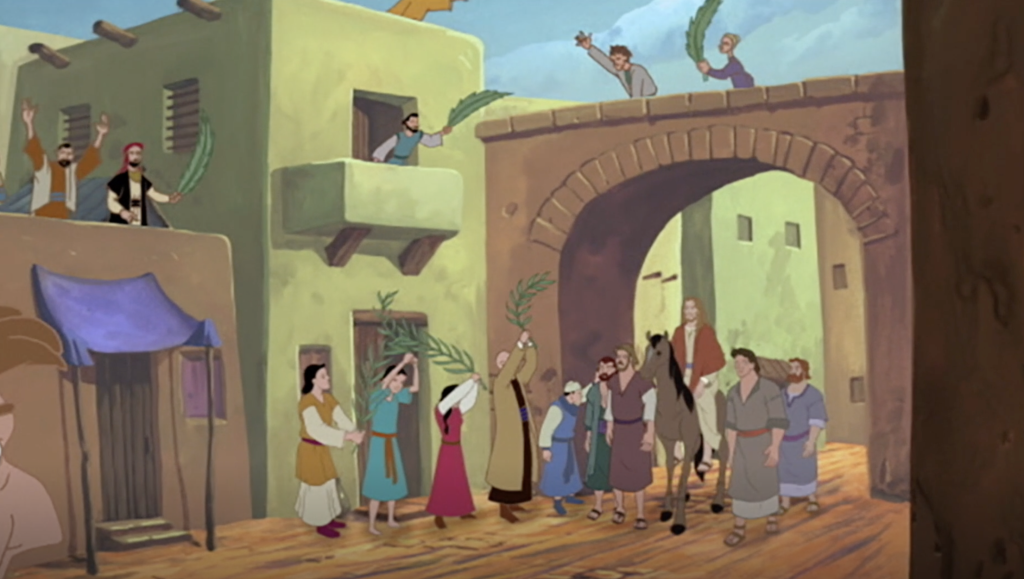
Lent, the 40-day period of fasting and repentance before Easter, developed as the church grew. Its purpose was preparation: a season of stripping away, taking stock, and arriving at Easter Sunday with a heart ready to celebrate. Holy Week, the final week of Lent, marked the key moments of Jesus’s final days. Palm Sunday commemorated the triumphal entry. Maundy Thursday marked the Last Supper. Good Friday was the crucifixion. Holy Saturday was the waiting. Easter Sunday was the celebration.
Quartodeciman Controversy and the Council of Nicaea
The Quartodeciman controversy centered on a dispute about the fourteenth. Churches in Asia Minor celebrated Pascha on the 14th of Nisan, the Jewish Passover date, regardless of what day of the week it fell on. Churches in Rome and elsewhere insisted the celebration should always land on a Sunday, the day of the resurrection.

The debate was significant enough that in the late 2nd century, Bishop Polycarp of Smyrna traveled to Rome to discuss it with Bishop Anicetus. They disagreed, parted amicably, and each kept their own practice. Later, Bishop Victor of Rome threatened to excommunicate the Asian churches entirely, a threat that provoked sharp letters from other bishops who thought the response disproportionate.
The Council of Nicaea in 325 AD resolved it. The council decreed that Easter should be celebrated on the Sunday following the first full moon after the spring equinox, and that this calculation should be done independently of the Jewish calendar. Sunday was non-negotiable. The resurrection happened on a Sunday and the weekly celebration should too. The Quartodeciman practice faded, though it took time.
Easter Date
Easter does not have a fixed date. It changes each year and falls on the first Sunday after the first full moon on or after March 21. This places it between March 22 and April 25. Western churches use the Gregorian calendar, while the Eastern Orthodox church uses the Julian calendar, which is 13 days behind. Because of this, the dates sometimes match and sometimes differ by several weeks. In the United States, Easter is not a federal holiday. It always falls on a Sunday, when many churches hold special worship services, and Good Friday is observed in some states.
Easter Traditions and Popular Customs
Easter sits at the intersection of religious observance and spring celebration, and the customs that surround it reflect both. Eggs and rabbits are the most recognizable symbols, and both connect to springtime themes of new life, fertility, and renewal. These are images the church has long seen as fitting companions to resurrection.
Eggs have a long history in Paschal observance. In the early church, eggs were forbidden during Lent. By Easter Sunday, the accumulated eggs were given as gifts and eaten in celebration. The practice of dyeing them red, still common in Orthodox traditions, represents the blood of Christ. The elaborate decorated eggs of Eastern European tradition, particularly Ukrainian pysanky, are among the most beautiful Easter folk art in the world.
The Easter Bunny is a later addition with roots in German tradition. The Osterhas, or Easter Hare, was said to lay eggs and hide them for children to find. German immigrants brought this folk tradition to America in the 18th century, where it spread widely. By the 19th century, candy-filled Easter baskets and egg hunts were common American customs.
New clothes for Easter Sunday trace back to the early church, when newly baptized Christians wore white garments. The custom evolved into the practice of wearing new spring clothes to Easter services, a tradition that drove significant retail activity by the late 19th century.
Modern Easter Celebrations and Easter Sunday
For practicing Christians, Easter Sunday is the high point of the church year. Many churches fill to capacity. Along with Christmas, Easter draws the largest attendance of the year. Services often begin before dawn with a sunrise service, echoing the women who arrived at the tomb at first light. Traditional elements include the proclamation “He is risen!” answered by the congregation with “He is risen indeed!” This call-and-response dates back centuries.
Holy Week gives Easter its proper context. Palm Sunday opens the week with the celebration of Jesus’s entry into Jerusalem. Maundy Thursday commemorates the Last
Supper and Jesus’s washing of the disciples’ feet. The word “maundy” comes from the Latin mandatum, the new commandment Jesus gave to love one another. Good Friday services mark the crucifixion, often with somber, stripped-down worship. Holy Saturday is a day of waiting.
Easter Sunday itself often includes community celebrations beyond the worship service: church brunches, neighborhood egg hunts, family gatherings. For many families, it is one of the few times extended family gathers around a shared meal. The day carries both the weight of the theological occasion and the lightness of spring.
Family Activities: Easter Eggs and the Easter Bunny
Egg decorating has become one of the most universal Easter activities for families with children. Hard-boiled eggs dyed with food coloring, then hidden around the house or yard, give young children a tangible way to participate in the holiday. The egg hunt itself may trace back to Martin Luther, who is said to have hidden Easter eggs for his congregation’s children to find, though the history here is murky.

The Easter Bunny arrived in American culture via German settlers in Pennsylvania in the 1700s. The original Osterhas was an egg-laying hare, a creature of pure folk imagination, who hid eggs for well-behaved children. Over time, the basket replaced the hidden eggs as the primary delivery mechanism, filled with candy, small toys, and dyed eggs. By the mid-20th century, the Easter Bunny had become a fully commercialized figure.
Families that want to keep the focus on the resurrection often layer meaning onto these traditions deliberately, using the egg as a symbol of new life or telling the Easter story alongside the egg hunt. Resurrection eggs, which are plastic eggs each containing a small symbol from the Easter story, have become popular in Christian households as a way to make the narrative tangible for young children.
How to Celebrate Easter with Meaning
If you want Easter to feel like more than a long weekend, it helps to make some intentional choices ahead of time.
Attending worship matters. Easter Sunday services are designed to carry the weight of the day: the scripture readings, the music, the proclamation of resurrection, the Eucharist for those traditions that celebrate it. Attending a Good Friday service the Friday before gives Easter Sunday its proper contrast. The silence and sorrow of the crucifixion makes the Sunday morning celebration land differently.
Charitable giving fits naturally with Easter. Many churches run food drives or community service projects during Holy Week. Acts of generosity in the week of Easter connect the theological event, death defeated and new life given, to its practical implications for how Christians treat their neighbors.
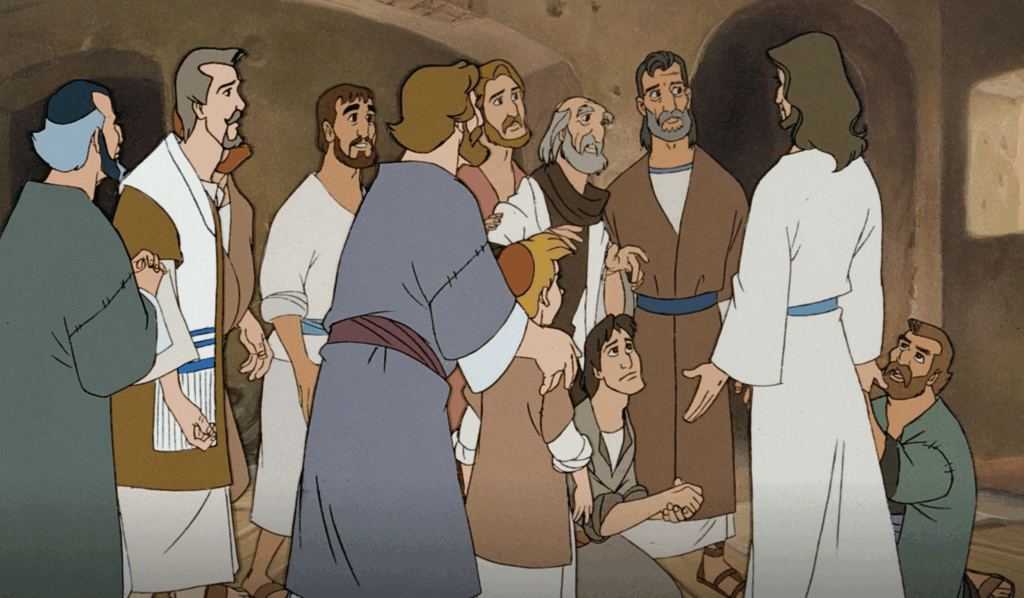
Family reflection rituals anchor the day for children. Reading the resurrection account together on Easter morning, from Matthew 28, Mark 16, Luke 24, or John 20, before the egg hunt gives the day its sequence. The story comes first. The celebration follows. Some families light a candle and say a simple prayer before Easter breakfast. Others keep a tradition of the same hymn sung before the meal each year.
Faith-filled stories can extend the celebration through the day. Films that bring scripture to life, stories of resurrection hope and faith through suffering and new beginnings, give children and families a way to stay in the spirit of Easter beyond the morning service. Living Scriptures has a library of 5,000+ faith-centered, family-safe titles available across all major streaming devices, completely ad-free. It is the kind of content you can turn on without checking first.
Why Celebrate Easter

Easter is worth celebrating because the resurrection, if it happened, is the most important event in human history. And the evidence the New Testament presents, the empty tomb, the eyewitness appearances, the transformation of frightened disciples into people who died proclaiming what they had seen, has been taken seriously by thoughtful people for two thousand years.
Beyond the theological claim, Easter marks the renewal of hope. Spring follows winter. The tomb was empty. Death is not the final word. These are truths worth marking with worship, with family, with celebration, and with the kind of stories that carry those truths into the imagination of the next generation.
God sees every tear. He is acquainted with grief and suffering. Jesus entered it fully. And Easter Sunday is the answer. “Death has been swallowed up in victory” (1 Corinthians 15:54). That is why we celebrate.
See the events of Easter Week come to life in a meaningful, daily way with Living Scriptures.
Start Your Easter Week Journey